UHP Diaphragm Valves
An ultra high purity diaphragm valve is the default shut-off device in a specialty gas distribution system. Unlike a packed valve, the process gas never touches a sliding stem seal: a metal diaphragm isolates the actuator from the flow path, so particle generation and dead volume stay extremely low.
Valonix UHP diaphragm valves are built around 316L VIM/VAR stainless steel bar stock, electropolished wetted surfaces and face-seal or butt-weld end connections. They are specified for semiconductor tool hook-up, gas cabinets, valve manifold boxes and high purity laboratory lines where moisture, oxygen and particulate contamination must be controlled.
Why a diaphragm design for ultra high purity gas
The diaphragm forms a hermetic barrier between the process stream and the actuator. There is no packing to outgas, no lubricant in the gas path and no cavity that traps process gas between cycles. A short, smooth flow path also makes purging fast, which matters when switching between reactive gases such as silane, ammonia or hydrogen chloride.
- Metal diaphragm isolation with no stem packing in the wetted path
- Low internal volume for rapid purge and low carry-over
- Electropolished wetted surfaces to reduce moisture retention
- Face seal, butt weld or compression end connections
Materials and surface finish
Body material is 316L VIM/VAR stainless steel for low inclusion content and consistent corrosion resistance. Wetted surfaces are electropolished, then cleaned, dried and double-bagged for cleanroom installation. Diaphragm material is selected by gas compatibility: 316L for general high purity service and nickel-based alloys for aggressive halides.
- 316L VIM/VAR body, low sulfur and low inclusion
- Electropolished internal flow path
- Helium leak tested before release
- Cleanroom assembly and double-bag packaging
Selecting the right flow coefficient
Match Cv to the required flow rather than oversizing the valve. A 1/4 in seat with Cv 0.27 suits point-of-use tool isolation; 1/2 in and 3/4 in bodies with Cv 0.70-2.8 serve branch lines; a 1 in body with Cv 3.5 belongs on a main distribution header. Oversized valves add dead volume and slow down purge cycles.
- Cv 0.20-0.27: point-of-use and instrument isolation
- Cv 0.70-0.80: branch and panel lines
- Cv 2.8-3.5: headers and high flow distribution
Valves in this category
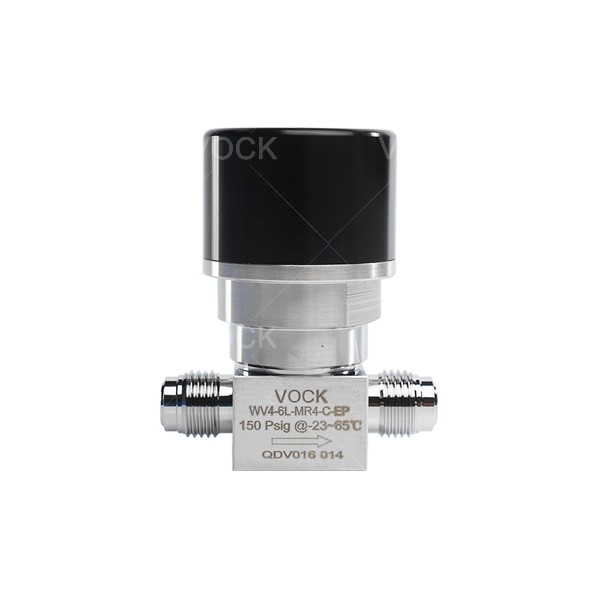 VX4-LP
VX4 Low Pressure UHP Diaphragm Valve
- Port size1/4, 3/8
- Max. pressure300 PSI
- Cv0.27
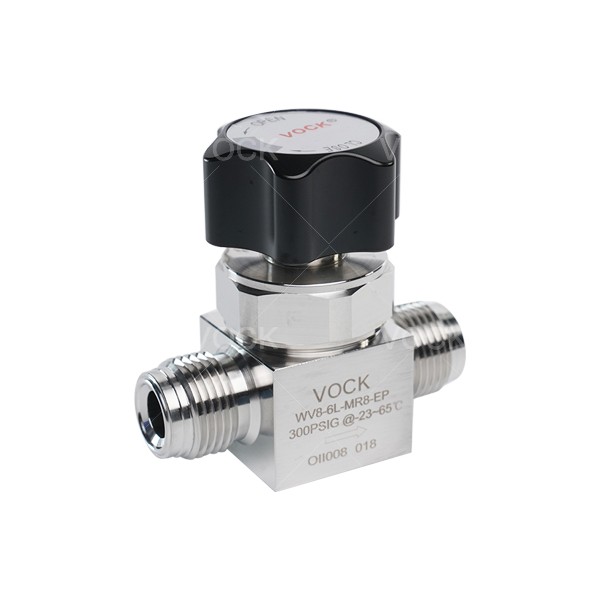 VX8-LP
VX8 Low Pressure UHP Diaphragm Valve
- Port size1/2
- Max. pressure300 PSI
- Cv0.70
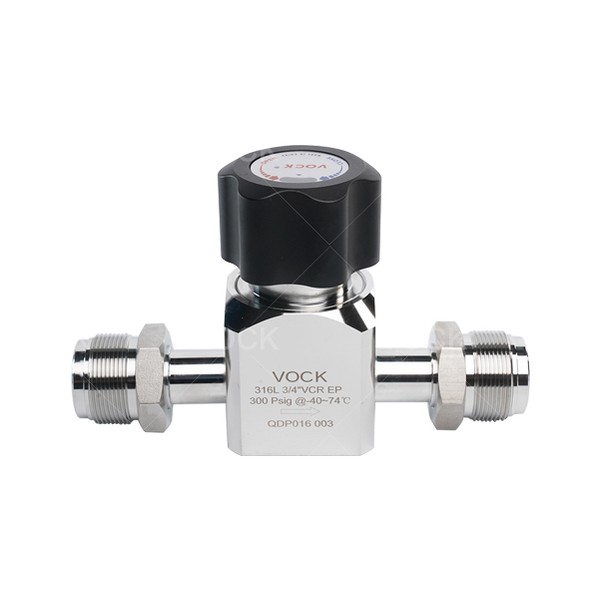 VX12-LP
VX12 High Flow UHP Diaphragm Valve
- Port size3/4
- Max. pressure300 PSI
- Cv2.8
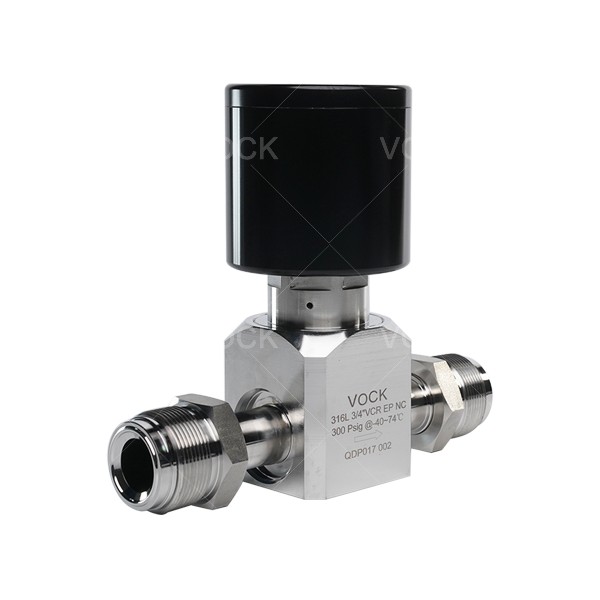 VX16-LP
VX16 High Flow UHP Diaphragm Valve
- Port size1 in
- Max. pressure300 PSI
- Cv3.5
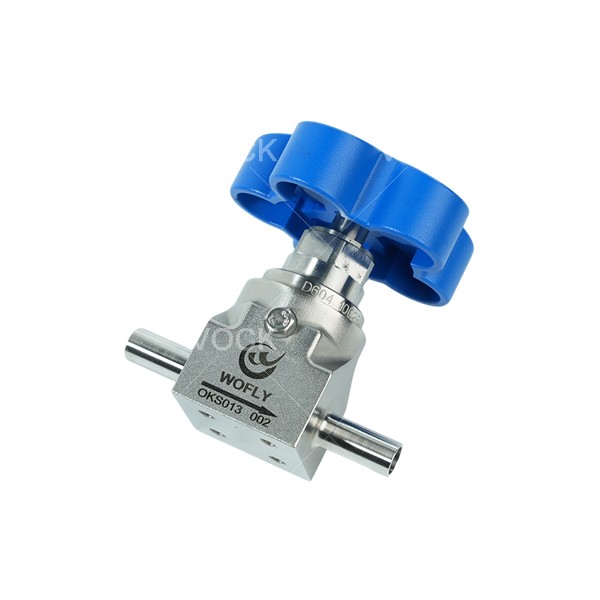 VP20
VP20 High Pressure Line Diaphragm Valve
- Port size3/8, 1/4
- Max. pressure20 MPa
- CvOn request
Typical specifications
| Body material | 316L VIM/VAR stainless steel |
|---|---|
| Port sizes | 1/4", 3/8", 1/2", 3/4", 1" |
| End connections | VCR face seal, butt weld, compression |
| Working pressure | 300 PSI standard / up to 4500 PSI high pressure |
| Leak test | Helium mass spectrometer, inboard and across seat |
| Actuation | Manual knob or pneumatic, normally closed |
Frequently Asked Questions
What does UHP mean for a diaphragm valve?
UHP (ultra high purity) refers to construction and cleanliness: low-inclusion 316L VIM/VAR material, electropolished wetted surfaces, helium leak testing and cleanroom packaging, not just a pressure rating.
Can UHP diaphragm valves handle corrosive specialty gases?
Yes, when the diaphragm and body alloy are matched to the gas. Halide and hydride services commonly use nickel-based diaphragms; confirm compatibility before ordering.
Which end connection should I choose?
VCR face seals give the cleanest, most repeatable metal-to-metal seal for tool hook-up. Butt welds are preferred for permanent high purity headers, and compression fittings suit field-installed instrument lines.