High Purity Ball Valves
Ball valves provide fast, full-bore isolation on specialty gas utility lines, vent headers and cabinet purge circuits. Valonix high purity ball valves are available in instrument, three-piece, integral and welded body styles to match different maintenance and cleanliness requirements.
For the most contamination-sensitive process lines, a diaphragm valve is usually preferred. Ball valves earn their place where full flow, quick quarter-turn operation or a compact panel footprint matters more than minimum dead volume.
Body styles
An instrument ball valve with compression ends suits 1000 PSI utility lines. A three-piece body allows seat replacement without cutting the line, while an integral or welded body removes potential leak paths entirely and is preferred on permanent high pressure headers.
- Instrument body: 1000 PSI, compression ends
- Three-piece: serviceable seats, 3000-6000 PSI
- Integral / welded: minimum joints, permanent lines
Pressure and port coverage
Coverage runs from 1/4 in to 1 in with compression, male/female thread and welded ends. High pressure three-piece and integral bodies are rated 3000-6000 PSI; welded ball valves serve larger 1/2-1 in distribution lines.
- 1/4" to 1" ports
- 1000-6000 PSI ratings
- Compression, threaded and welded ends
Cleanliness for gas service
Specify degreased, cleaned and capped construction for any ball valve installed upstream of a UHP process line. Standard industrial ball valves carry machining oils and particulates that can migrate into a high purity gas system.
- Degreased and cleaned for gas service
- Capped ends until installation
- Avoid general industrial valves upstream of UHP tools
Valves in this category
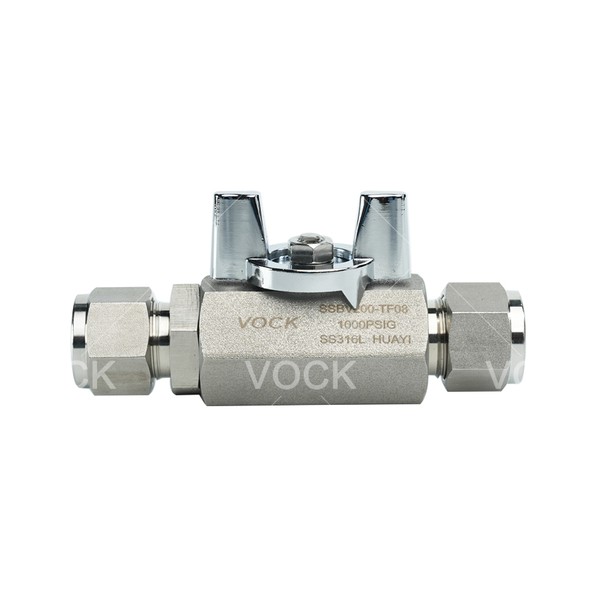 BI
BI Instrument Ball Valve
- Port size1/4, 1/2
- Max. pressureOn request
- CvOn request
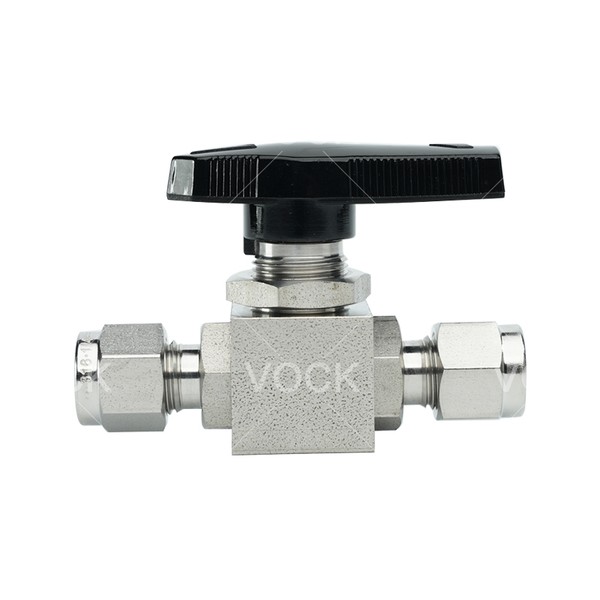 B3H
B3H Three-Piece High Pressure Ball Valve
- Port size1/4, 3/8, 1/2
- Max. pressureOn request
- CvOn request
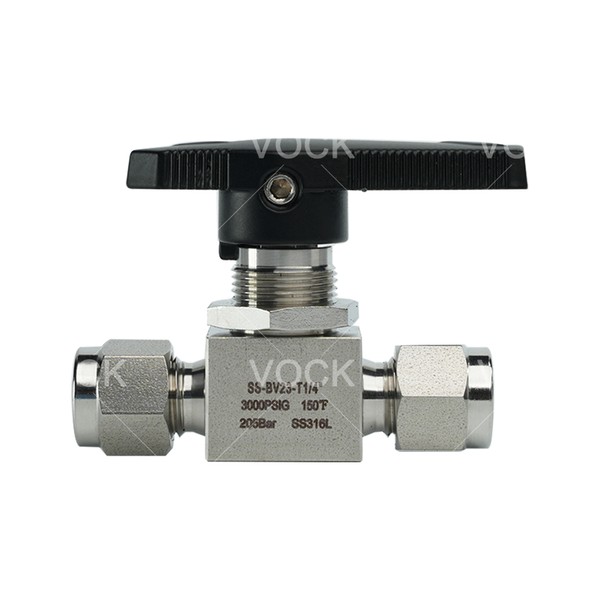 BVI
BVI Integral Body Ball Valve
- Port size1/4, 3/8, 1/2
- Max. pressureOn request
- CvOn request
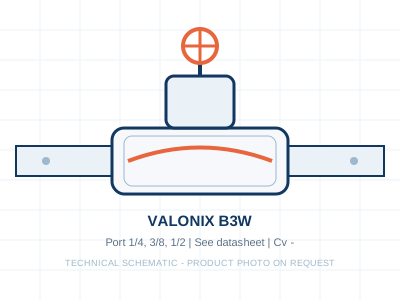 B3W
B3W Three-Way Ball Valve
- Port size1/4, 3/8, 1/2
- Max. pressureOn request
- CvOn request
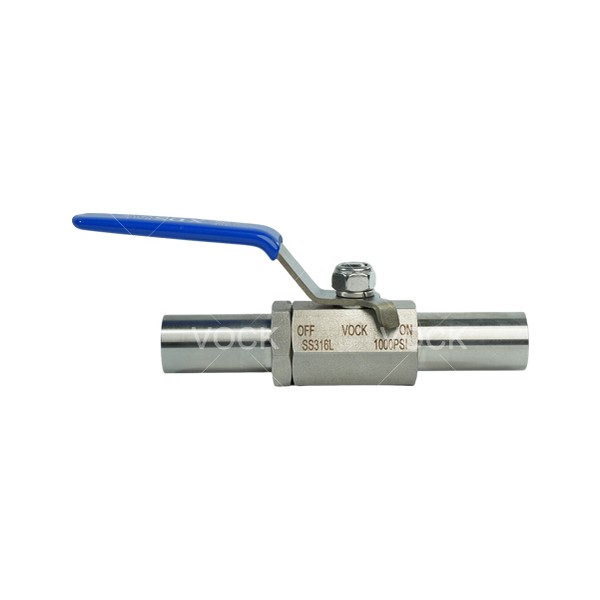 BW
BW Welded Body Ball Valve
- Port size1/2, 3/4, 1
- Max. pressureOn request
- CvOn request
Typical specifications
| Body styles | Instrument, 3-piece, integral, welded |
|---|---|
| Port sizes | 1/4", 3/8", 1/2", 3/4", 1" |
| Working pressure | 1000-6000 PSI |
| End connections | Compression, NPT, butt weld |
| Operation | Quarter-turn manual |
| Body | 316 stainless steel |
Frequently Asked Questions
Should I use a ball valve or a diaphragm valve on a UHP line?
Use a diaphragm valve on the process line for minimum dead volume and particle generation; use a ball valve on utility, vent and purge circuits where full flow is more useful.
What does a three-piece body buy me?
Seats and seals can be serviced without removing the valve body from the line, at the cost of two extra body joints.
Are these valves cleaned for oxygen or UHP service?
Cleaned and capped versions are available; state the service gas so the cleaning level can be confirmed.