High Purity Check Valves
A high purity check valve protects a specialty gas source from reverse flow: it prevents purge gas from backing into a cylinder, keeps process gases out of shared vent headers and stops cross-contamination between branches of a gas panel.
Valonix check valves use a spring-loaded poppet with a soft or metal seat in a 316L body. Cracking pressure ranges from 1/3 PSI for sensitive low-pressure lines up to 25 PSI where positive back-pressure prevention is required.
Choosing a cracking pressure
Low cracking pressure (around 2 PSI or 1/3 PSI) suits low-pressure distribution and purge lines where pressure drop must be minimal. Higher cracking pressures are used on high-pressure cylinder and charging lines to hold a deliberate back-pressure. Always include cracking pressure in the pressure budget of the panel.
- 1/3-2 PSI: low pressure distribution and purge
- 25 PSI: deliberate back-pressure on charging lines
- Include cracking pressure in the line pressure budget
Installation orientation and cleanliness
Check valves are directional. Flow direction is marked on the body, and installing one backwards is a common cause of a panel failing its leak or flow test. Keep the valve capped until installation, and specify cleaned and bagged construction for UHP service.
- Observe the flow arrow on the body
- Keep capped until installation
- Cleaned and double-bagged for UHP lines
Pressure ratings
The range spans 300 PSI for low-pressure distribution, 1000-3000 PSI for general high purity headers and 3000-6000 PSI for cylinder-side high pressure lines. Port options include VCR face seal, internal thread, compression and external thread.
- 300 PSI low pressure distribution
- 1000-3000 PSI general headers
- 3000-6000 PSI high pressure cylinder side
Valves in this category
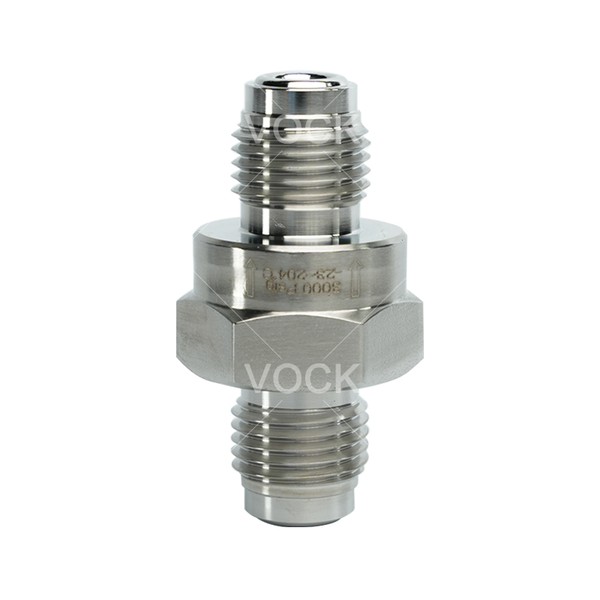 CW
CW Low Cracking Pressure Check Valve
- Port size1/4, 3/8, 6-12mm
- Max. pressure300 PSI
- CvOn request
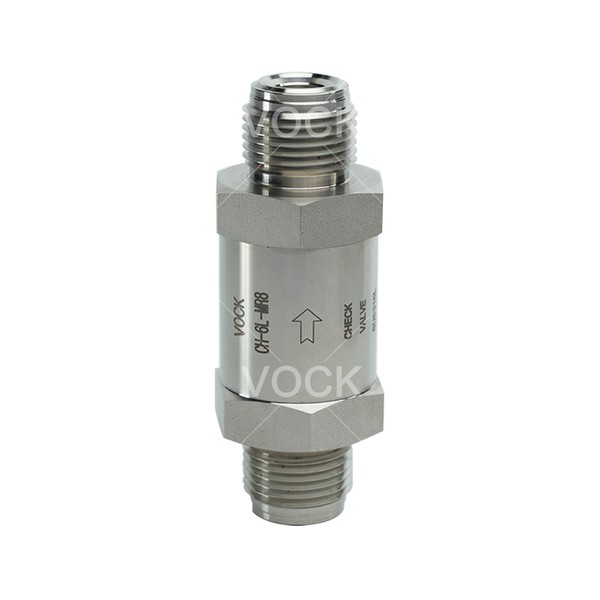 CH
CH High Pressure Check Valve
- Port size1/4, 1/2, 3/4
- Max. pressure6000 PSI
- CvOn request
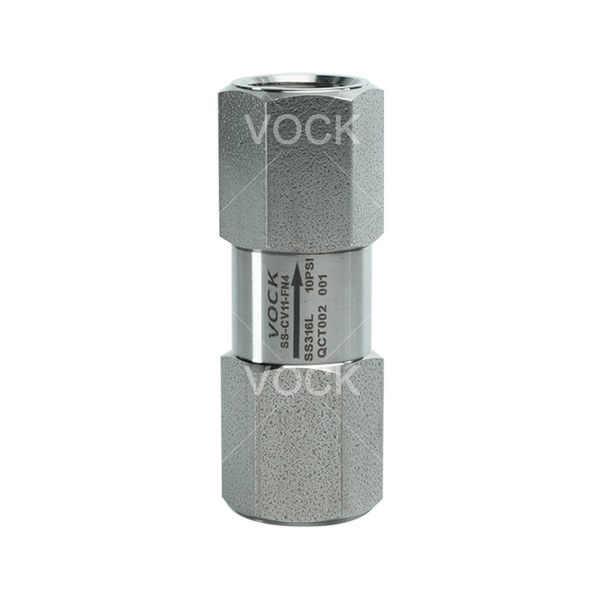 CV
CV High Purity Check Valve
- Port size1/4
- Max. pressure3000 PSI
- CvOn request
Typical specifications
| Cracking pressure | 1/3, 2 or 25 PSI |
|---|---|
| Working pressure | 300-6000 PSI |
| Port sizes | 1/4", 3/8", 1/2", 3/4", 6-16 mm |
| End connections | VCR, NPT, compression |
| Body | 316L stainless steel |
| Flow direction | Marked on body |
Frequently Asked Questions
What is cracking pressure?
It is the minimum upstream pressure needed to open the poppet. Choose it based on how much pressure drop the line can tolerate.
Can a check valve replace an isolation valve?
No. A check valve prevents reverse flow but is not a leak-tight shut-off for maintenance isolation.
Are check valves directional?
Yes. Install with the flow arrow pointing downstream; reversed installation stops flow entirely.