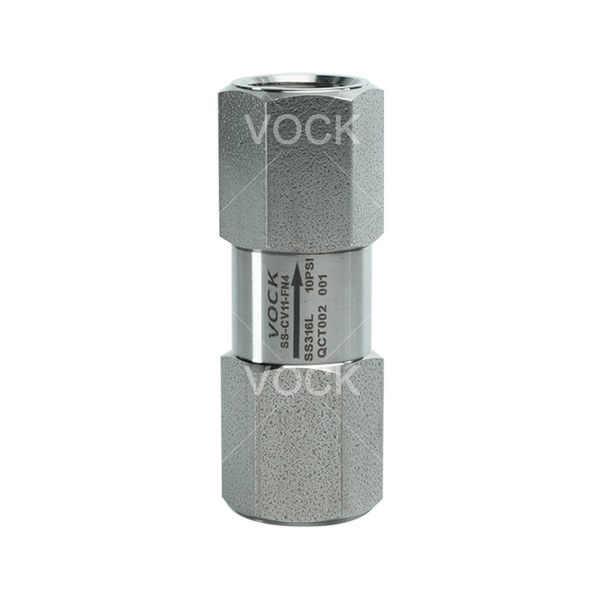
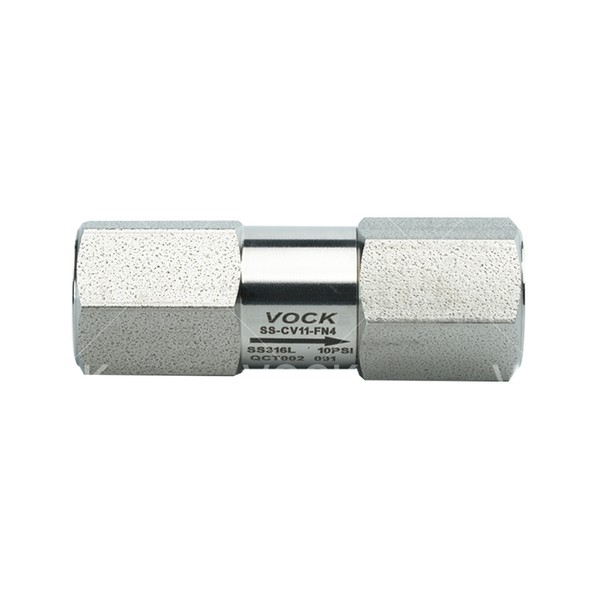
CV High Purity Check Valve
Versatile 316L check valve with VCR, compression or threaded ends for general high purity gas panels.
Built for ultra high purity specialty gas service, the CV belongs to the High Purity Check Valves family covering isolation, switching and flow control.
CV High Purity Check Valve overview
The CV is a high purity specialty gas valve specified with 1/4 ports, a flow coefficient of a model-specific and a maximum working pressure of 3000 PSI. Versatile 316L check valve with VCR, compression or threaded ends for general high purity gas panels. It is intended for the point in a high purity gas system where a clean, repeatable shut-off or switching function is needed without introducing a packed stem seal into the process stream.
The wetted flow path is kept short and smooth, with a metal or hard-polymer sealing element selected for the gas. Seats and closures are machined to a controlled finish so the valve can be purged quickly and will not hold up moisture between process cycles. A short, smooth flow path and low internal volume make purge cycles fast, which matters when a line changes between reactive gases. Available end connections are compression, male npt, female npt,cracking pressure: 1/3-25 psi, so the same body can be used on face-sealed tool hook-ups, welded distribution headers or field-installed instrument lines.
Key features and design benefits
- 1/4 ports, Cv a model-specific — sized for high purity check valve 3000 psi flow duty without excess dead volume
- 3000 PSI maximum working pressure with a reinforced seat and helium-tested pressure envelope
- The wetted flow path is kept short and smooth, with a metal or hard-polymer sealing element selected for the gas.
- Electropolished wetted surfaces for fast dry-down and low moisture retention
- Manual or normally closed pneumatic actuation; pneumatic versions fail closed on loss of instrument air
- VCR, butt weld, compression or cylinder-standard end connections to match the installation
- Cleanroom assembly, double-bag packaging and per-valve leak records available
Technical specifications
| Port size | 1/4, 3/8, 1/2, 3/4, 6-16mm |
|---|---|
| End connections | compression, male NPT, female NPT,Cracking pressure: 1/3-25 PSI |
| Max working pressure | 1000-3000 PSI |
| Model code | CV |
| Product family | High Purity Check Valves |
| Body material | 316L VIM/VAR stainless steel, low inclusion |
| Sealing element | Metal seat with PCTFE / PTFE or hard-polymer sealing element by gas |
| Wetted surface finish | Electropolished, typical Ra 0.25 um (10 uin) or better |
| Leak testing | Helium mass spectrometer, inboard and across seat; typical 1 x 10^-9 mbar l/s |
| Operating temperature | Typical -10 C to +80 C manual, -10 C to +65 C pneumatic |
| Actuation | Manual handwheel or normally closed pneumatic, 60-90 PSI instrument air |
| Cleanliness | Cleaned, dried and assembled for ultra high purity gas service |
| Packaging | Cleanroom double-bag, sealed for installation |
| Documentation | Material certificate, helium leak record, certificate of conformance |
Values above describe the standard configuration of model CV. Final materials, seat, actuation, test limits and certification are confirmed on the order-specific datasheet issued with your quote.
Model comparison within the High Purity Check Valves family
Select the body by flow demand rather than by port size alone. The table below compares the CV with its sibling models on the three parameters that drive a gas system design: port size, flow coefficient and maximum working pressure.
Construction and wetted materials
The wetted flow path is kept short and smooth, with a metal or hard-polymer sealing element selected for the gas. Seats and closures are machined to a controlled finish so the valve can be purged quickly and will not hold up moisture between process cycles. For the CV, the wetted path is machined from 316L VIM/VAR stainless steel with low inclusion and controlled sulfur content, then electropolished. A nickel-based diaphragm or seat alloy can be substituted where halide or hydride gases demand it.
| Component | Standard specification |
|---|---|
| Body | 316L VIM/VAR stainless steel bar stock |
| Wetted finish | Electropolished, typical Ra 0.25 um (10 uin) or better |
| Sealing element | Metal seat with PCTFE / PTFE or hard-polymer sealing element by gas |
| Actuator | Manual handwheel or normally closed pneumatic piston, 60-90 PSI supply |
| Process connection | compression, male NPT, female NPT,Cracking pressure: 1/3-25 PSI |
End connections and port options
The CV is normally ordered with 1/4 ports. Connection choice affects both cleanliness and maintainability: VCR face seals give a repeatable metal-to-metal seal for tool hook-up, orbital butt welds suit permanent high purity headers, and compression fittings are used where a line must be assembled in the field.
| Parameter | Available option |
|---|---|
| Standard port | 1/4 |
| End connections | compression, male NPT, female NPT,Cracking pressure: 1/3-25 PSI |
| Seal standard | VCR face seal / orbital butt weld / compression / CGA or DISS for cylinder service |
| Actuation | Manual, or normally closed pneumatic with 60-90 PSI instrument air |
| Optional documentation | Material certificate, helium leak record, certificate of conformance |
Gas compatibility and typical applications
Model CV is selected for high purity N2, Ar, He, H2, O2, and corrosive hydride or halide mixtures when the wetted alloy is matched to the gas. Always state concentration, temperature and any moisture or oxygen limit so the wetted alloy and seat can be confirmed before release.
- Semiconductor tool hook-up and gas cabinet isolation branches
- Valve manifold boxes, changeover panels and purge / vent legs
- High purity laboratory, analytical instrument and calibration gas lines
- Photovoltaic, MOCVD and hydrogen distribution systems
- Related application guides:
- Photovoltaic & Solar Cell Manufacturing
- Laboratory & Analytical Instrument Gas
- Hydrogen & Fuel Cell High Pressure Valves
Installation, purging and handling
Install the CV with the flow direction and port orientation shown on the approved drawing. Keep the protective caps in place until the joint is made, tighten face-seal fittings to the specified torque, and purge with dry inert gas before introducing process gas. Because the internal volume is low, a short cyclic purge is normally enough to reach the required moisture level.
- Handle with clean gloves in a controlled area; do not open the double bag until installation
- Use orbital welding or certified face-seal glands on high purity headers
- Purge with dry N2 or Ar and verify moisture / oxygen upstream before process gas
- Helium leak check the assembled joint, then the inboard and across-seat envelope
- Record the serial number, leak result and gas service in the system dossier
Ordering and configuration
Quote the model code and the options below. Where a gas is corrosive or pyrophoric, include the concentration so the diaphragm or seat alloy can be matched to the service.
| Ordering parameter | Your selection |
|---|---|
| Base model | CV — CV High Purity Check Valve |
| Port size | 1/4 |
| End connection | compression, male NPT, female NPT,Cracking pressure: 1/3-25 PSI |
| Actuation | Manual handwheel / normally closed pneumatic (60-90 PSI) |
| Wetted alloy | 316L VIM/VAR standard, nickel-based alloy by gas compatibility |
| Documentation | Material certificate, helium leak record, CoC (state if required) |
Ready to specify the CV?
Send the gas, pressure, flow and connection details — we will confirm the model, materials and lead time.
Related models and alternatives
Other valves in the High Purity Check Valves family and adjacent groups that may suit a different Cv, pressure or port requirement.
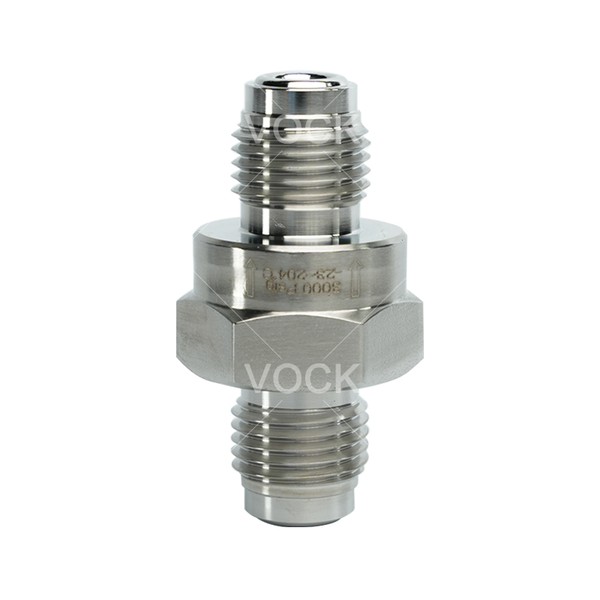 CW
CW Low Cracking Pressure Check Valve
- Port size1/4, 3/8, 6-12mm
- Max. pressure300 PSI
- CvOn request
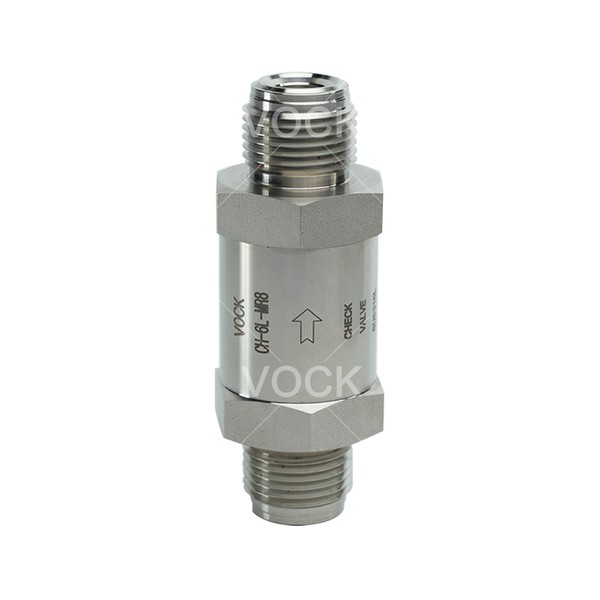 CH
CH High Pressure Check Valve
- Port size1/4, 1/2, 3/4
- Max. pressure6000 PSI
- CvOn request
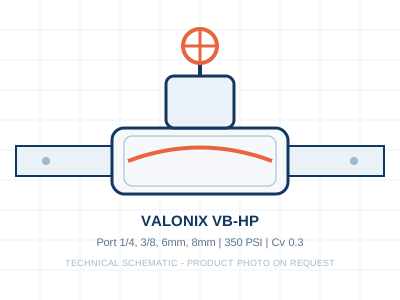 VB-HP
VB-HP Bellows Sealed Valve
- Port size1/4, 3/8, 6mm, 8mm
- Max. pressure350 PSI
- Cv0.3
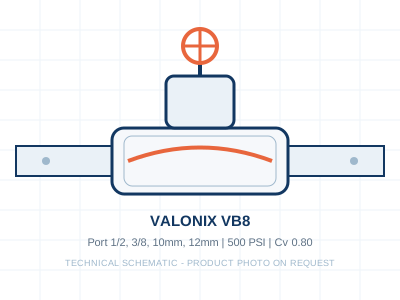 VB8
VB8 Low Pressure Bellows Sealed Valve
- Port size1/2, 3/8, 10mm, 12mm
- Max. pressure500 PSI
- Cv0.80
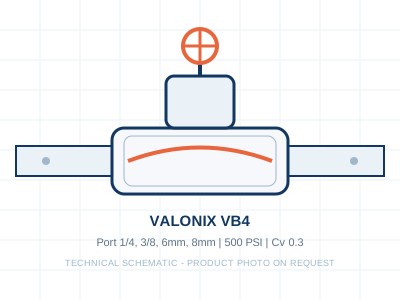 VB4
VB4 Low Pressure Bellows Sealed Valve
- Port size1/4, 3/8, 6mm, 8mm
- Max. pressure500 PSI
- Cv0.3
Frequently Asked Questions
What are the key specifications of the CV?
The CV is supplied with 1/4 ports, a maximum working pressure of 3000 PSI and a Cv of a model-specific. End connections are compression, male npt, female npt,cracking pressure: 1/3-25 psi. The full specification table on this page lists materials, leak testing, actuation and cleanliness requirements.
Is the CV suitable for corrosive or toxic specialty gases?
It is used with high purity N2, Ar, He, H2, O2, and corrosive hydride or halide mixtures when the wetted alloy is matched to the gas. Compatibility depends on the wetted alloy and the sealing element, so state the gas and concentration when requesting a quote and we will confirm the material selection.
How is the CV actuated and what is its safe state?
Standard configurations are a manual handwheel or a normally closed pneumatic actuator with 60-90 PSI instrument air. Pneumatic versions close on loss of air, which is the required safe state for most gas cabinet and tool hook-up isolation points.
How do I order the CV?
Quote model CV together with the gas list, operating pressure, required Cv, port size, end connection and actuation. Material certificates, per-valve helium leak records and a certificate of conformance can be supplied with the order.